
Ion Exchange Resins: Core Material for Semiconductor Ultrapure Water—The Time for Domestic Substitution Has Arrived
In semiconductor manufacturing, ultrapure water is known as the "blood of chips." From wafer cleaning to etching, from chemical mechanical polishing to photoresist dilution, every process relies on ultrapure water with a resistivity as high as 18 MΩ·cm. Behind it all, ion exchange resins play an irreplaceable core role.
Ion Exchange Resins: Core Material for Semiconductor Ultrapure Water—The Time for Domestic Substitution Has Arrived
In semiconductor manufacturing, ultrapure water is known as the "blood of chips." From wafer cleaning to etching, from chemical mechanical polishing to photoresist dilution, every process relies on ultrapure water with a resistivity as high as 18 MΩ·cm. Behind it all, ion exchange resins play an irreplaceable core role.
1. What is ion exchange resin?
Ion exchange resins are high-molecular-weight materials with ion exchange capabilities. Their backbone consists of cross-linked polymers, primarily styrene-divinylbenzene copolymers, functionalized with ionizable groups (e.g., sulfonic acid and quaternary ammonium groups). In aqueous solutions, these active groups reversibly exchange ions with those in the solution, enabling separation and purification processes.
Based on the nature of active groups, ion exchange resins are classified intoCation Exchange Resin(strong acids, weak acids) andAnion exchange resin(Cross-linked, weak-base); classified by pore structure into gel-type, macroporous-type, and uniform-pore-type. Special functional resins include chelating resins, nuclear-grade resins, polishing resins, adsorption resins, etc.
II. Critical Role of Ion Exchange Resins in Semiconductor Ultra-Pure Water
Semiconductor manufacturing demands extremely stringent water quality. Ultrapure water must remove nearly all ions, organic compounds, particulates, and microorganisms, with resistivity consistently maintained at18.2MΩ·cmIon exchange resin is precisely what makes this possible.Core Technology Materials。
In the ultrapure water production process, ion exchange resins are primarily used forTwo key steps:
1. Mixed-bed treatment processWater passes through the mixed-bed ion exchange system after reverse osmosis (RO) pretreatment. Mixed cation and anion exchange resins remove nearly all residual cations (e.g., Na⁺, Ca²⁺) and anions (e.g., Cl⁻, SO₄²⁻) via ion exchange reactions.
2. Terminal polishing: This is for ultrapure water preparation.Final LevelPolishing resin further increases the water's resistivity from approximately 17 MΩ·cm to18.2 MΩ·cm theoretical limitEnsure effluent quality meets the stringent requirements of semiconductor manufacturing.High-end polishing resins for chip manufacturing currently remain 100% reliant on imports.。
In 2024, the China Membrane Industry Association released three industry standards, including "Technical Requirements for Certification of Ion Exchange Resin Products Used in Mixed Bed Processes for Ultra-Pure Water Technology in the Semiconductor Industry" and "Technical Requirements for Certification of Ion Exchange Resin Products Used in Polishing Mixed Beds for Ultra-Pure Water Technology in the Semiconductor Industry," providing a technical foundation for standardized industry development.
3. Market Size and Competitive Landscape
Global market continues to grow
In 2024, the global semiconductor-grade ion exchange resin market for ultrapure water production was approximately4.34 billion USD, expected to grow to in 20317.44 billion USD, with a compound annual growth rate of7.9%In 2025, the global semiconductor-grade ion exchange resin market size was approximately9.34 billion USD, expected to reach by 203217.8 billion USDAs one of the world's largest semiconductor markets, China's sales revenue from ion exchange resin used in ultrapure water production is projected to reach 2032 in 2025.8.52 billion USD。
Competitive Landscape: International Giants Dominate the High-End Market
The global ion exchange resin market isoligopoly。Top TierFor global giants such as Dow Chemical (DuPont), LANXESS, Purolite, Mitsubishi Chemical, Sumitomo Chemical, and others. Among them,Dow holds a monopoly in monodisperse and polishing resins for semiconductor ultrapure water applications.。
Domestic enterprisesSegmented into three tiers: Tier 1 includes multinational giants with operations in China (e.g., Dow's Zhangjiagang facility); Tier 2 consists of listed leaders such as Lanxiao Technology, Zhengguang Shares, and Nanwei Technology, which possess advanced R&D capabilities; Tier 3 comprises small and medium-sized enterprises focused primarily on the mid-to-low-end water treatment resin market.
IV. Domestic Substitution: The Window Period Is Arriving
受Autonomy and Controllability Goals for the 15th Five-Year PlanDrivers, semiconductors, and nuclear industry downstream users are proactively advancing domestic substitution. Currently, select nuclear-grade resins and ultrapure water resins from Zhengguang Shares and Lanxiao Technology have entered trial operations in mainstream nuclear power projects and semiconductor fab ultrapure water systems. However,Polishing resins used in high-end chip manufacturing remain 100% dependent on imports.This is the most difficult hurdle for domestic substitution.
The period from 2026 to 2028 is expected to be the critical window for mass adoption of domestic high-end resins.China's storage leaders (YMTC and CXMT) are accelerating their capitalization processes, with new wafer fabs driving significantly higher demand for ion exchange resins used in ultrapure water and electronic chemical purification. The 2025 Central Economic Work Conference and the 2026 Two Sessions Government Work Report both emphasized "accelerating high-quality development of the integrated circuit and new materials supply chains," giving downstream manufacturers the incentive to provide opportunities for validating domestic resins.
5. Key Drivers
Demand for autonomous and controllable semiconductor industry chainsDomestic new wafer fabrication plants have driven a surge in demand for ion exchange resins used in ultrapure water and electronic chemical purification. In 12-inch wafer fabs, international giants hold nearly 47% market share of the ultrapure water stations.
Scaling up in nuclear and new energy scenariosThe 15th Five-Year Plan calls for the active, safe, and orderly development of nuclear power. With a growing number of nuclear reactors under construction or planned, there is increasing demand for nuclear-grade resins in both water treatment at nuclear plants and radioactive wastewater processing.
AI infrastructure drives indirect demandThe rapid expansion of AI computing infrastructure is driving growth in the semiconductor industry, boosting demand for ultra-pure water and ion-exchange resins.
VI. Baiyuan Water Industry: Supporting Domestic Production of Semiconductor Ultrapure Water Systems
Guangdong Baiyuan Environmental Protection Technology Co., Ltd. (Baiyuan Water Industry) has specialized in water treatment for over a decade, with extensive project experience in industrial ultrapure water systems. The company has already servedBOE, Kyocera Precision, InPower Electric, Bojie ElectronicsEquipped with ultra-pure water systems and purified water equipment from leading enterprises, achieving resistivity up to18.2MΩ·cmMeets the stringent requirements for ultrapure water in industries such as electronics, semiconductors, and biopharmaceuticals.
Ba Yuan Water Industry maintains long-term strategic partnerships with 3M, Pentair, and Dow.PuroliteA leading global brand with in-house R&D and system integration capabilities, providing semiconductor, electronics, and photovoltaic industry clients with end-to-end solutions fromSolution design, equipment selection, system integration, and operations managementYour complete-cycle ultrapure water solutions. Our company is equipped with industry-leading manufacturing and testing equipment, including fully automated stainless steel pipe welding machines, online intelligent eddy current flaw detectors, and spectrometers. Production is strictly organized in accordance with the ISO9001 quality management system.
Trust every drop: Baiyuan Water Industry empowers China's semiconductor industry with self-reliance and control.
Guangdong Baiyuan Environmental Protection Technology Co., Ltd.
Company Address: Room 2101, Building A, Zhengfang Yunxi Valley, Xiangzhou District, Zhuhai City
Official Website:www.beryon.cn
Phone: 0756-6230686
Recommended Related Cases
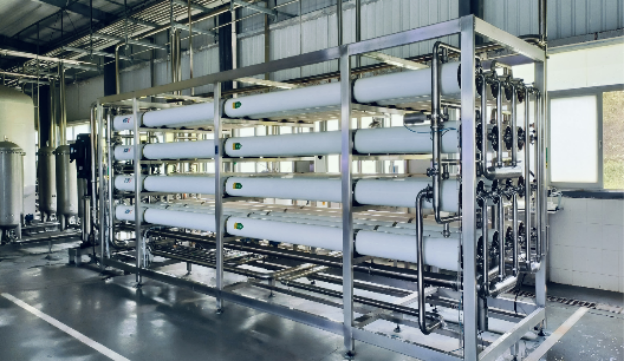
Robust Guangzhou Production Base Dual-Stage Reverse Osmosis Pure Water System Project Case | Baiyuan Water Industry
Robust Group utilizes Baiyuan Water Industry's dual-stage reverse osmosis pure water system. The produced water meets GB 19298-2014 packaging drinking water standards, with a bottled water production capacity of 2400 buckets per hour. Multi-stage pretreatment + dual-stage RO + terminal sterilization combination...
View Details
Zhuheng Hengqin Harrow Li De School Direct Drinking Water System Project Case | Baiyuan Water Industry
Baiyuan Water Industry provides a safe and healthy campus drinking water system for Zhuhai Hengqin Harrow School, covering primary, middle, and high school teaching buildings as well as dormitory areas. The system features a combination of 3M commercial drinking water purifiers and Shijifengyuan energy-saving drinking fountains, equipped with over...
View Details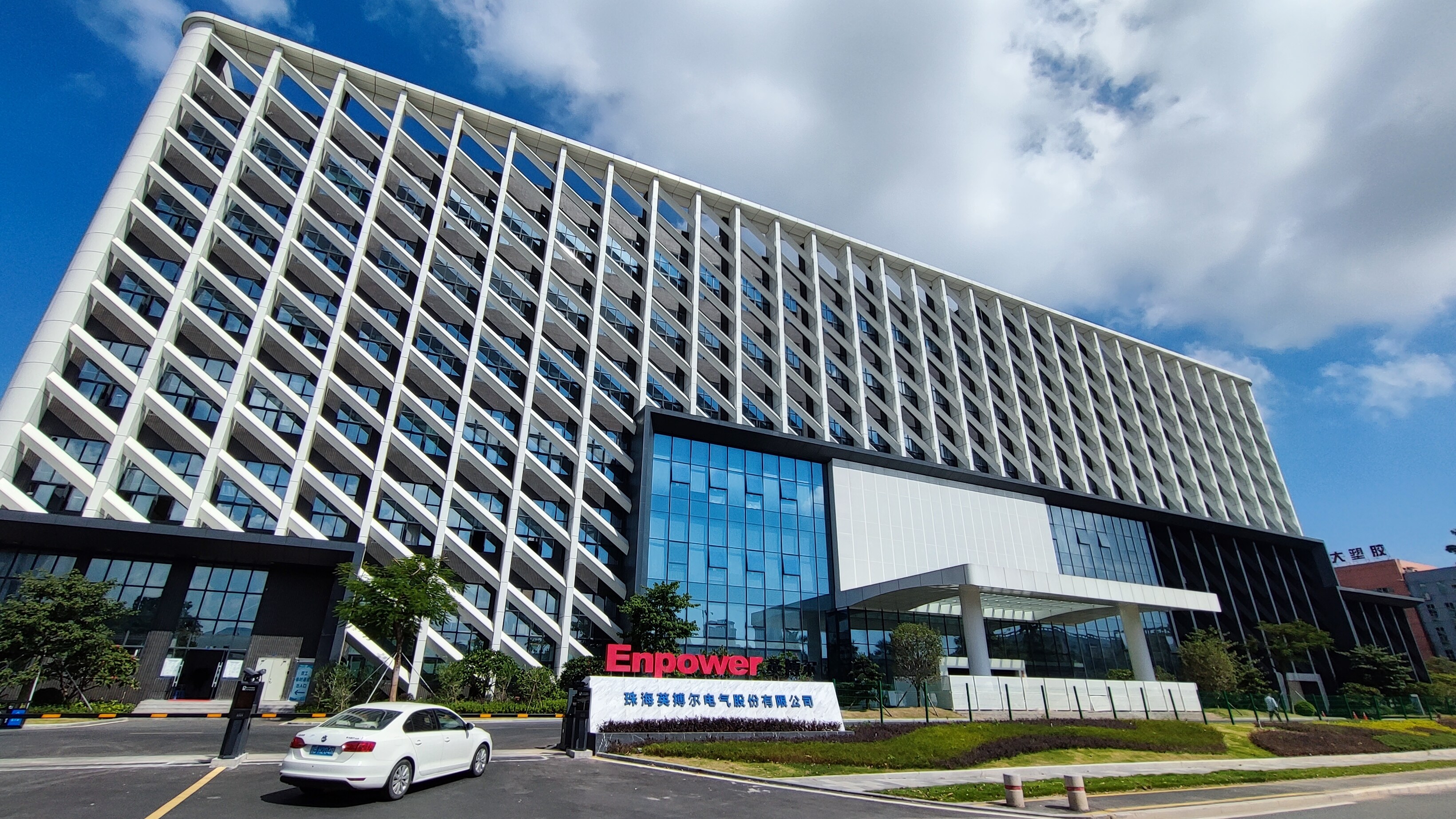
Zhuhie Inbott Electric Co., Ltd.
Secondary RO + EDI + Nuclear-Grade Resin Ultrapure Water System; produces ultrapure water for new energy equipment manufacturing (resistivity > 18.2 MΩ) and direct drinking water in the workshop.
View Details