Return News ListTech Sharing

Application of Ultrafiltration Membrane Technology in Water Treatment

Baiyuan Water Industry
2026/7/8
2340{0} read
Application of Ultrafiltration Membrane Technology in Water Treatment

Knowledge Sharing: Applications of Ultrafiltration Membrane Technology in Water Treatment

1. What is an ultrafiltration membrane?

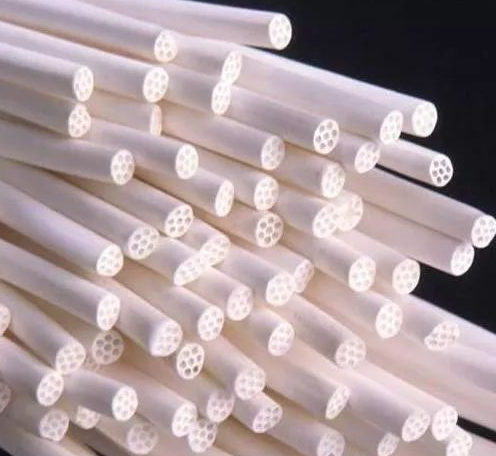
  Ultrafiltration membranes are among the earliest developed polymer membranes, featuring a nominal pore size range of 0.001 to 0.02 micrometers. When appropriate pressure is applied on one side of the membrane, the solvent and low-molecular-weight solutes in the solution pass through the microscopic pores to the other side, while high-molecular-weight solutes or emulsified micelles are retained, achieving filtration and separation.

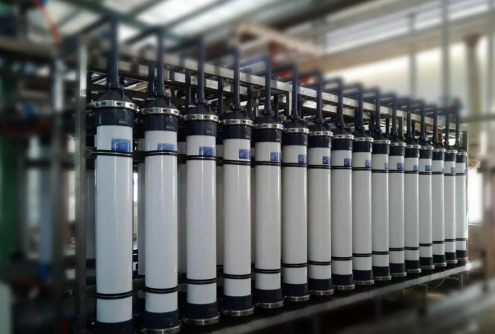
In water treatment, ultrafiltration membrane technology offers higher impurity removal efficiency than other filtration methods. With a filtration precision of up to 99.99%, it effectively eliminates most harmful substances in water. It also requires little or no chemical agents, preventing secondary contamination and ensuring superior treated water quality. Operationally, ultrafiltration-based systems are highly automated, simple, and reliable, featuring only on/off controls. Thanks to the strong chemical stability of ultrafiltration membranes—which resist acid/base corrosion and withstand high temperatures—they support high-temperature sterilization and disinfection, making them suitable for a wide range of applications.


II. Principles of Ultrafiltration Membrane Technology

Ultrafiltration membrane technology is a membrane-based separation process with filtration capabilities between nanofiltration and microfiltration. Its working principle is:

When a solution passes through a semi-permeable membrane under pressure, solvent and small molecules in the solute pass through to the other side, while large molecules and colloids are retained due to their inability to fit through the membrane pores. As the solution continues to flow, the accumulated retained material increases on the membrane surface. To achieve ultrafiltration, greater pressure must be applied to the solvent. Additionally, the layer formed on the membrane surface exhibits specific chemical properties that help retain and decompose certain pollutants, thereby purifying the water.

As macromolecules accumulate on the membrane surface, filtration rates decline, leading to "concentration polarization." To sustain effective ultrafiltration, cross-flow ultrafiltration systems are commonly employed in practice to mitigate this phenomenon.

3. Key Features of Ultrafiltration Membrane Technology

Compared to other water treatment technologies, ultrafiltration membrane technology offers numerous unmatched advantages:

First, ultrafiltration membranes exhibit high chemical stability and can withstand high temperatures, acids, and alkalis. This results in low feedwater quality requirements and broad applicability.

Second, ultrafiltration membrane technology features a simple principle that enables easy automation, labor savings, and straightforward operation with low maintenance requirements, ensuring stable and secure performance.

Third, ultrafiltration is a physical process that requires no chemical additives during water treatment, effectively preventing secondary contamination of the water body.

Fourth, ultrafiltration technology offers high efficiency and large treatment capacity, demonstrating exceptional performance in treating low-pollution urban drinking water. 

IV. Urban Drinking Water Purification

As society advances, demand for drinking water safety grows. However, pollution in urban water sources has worsened, making raw water increasingly unfit for direct consumption. Therefore, purification of urban drinking water is essential.

Urban drinking water primarily comes from two sources: groundwater and surface water. Although the pollution mechanisms differ between these sources, common contaminants include pathogens, bacteria, fungi, viruses, and suspended solids.

Traditional water purification methods effectively inactivate microorganisms and remove micron-sized suspended particles. Ultrafiltration membrane technology builds on this by also removing nanoscale particles, delivering higher-quality effluent and playing a vital role in safeguarding urban drinking water health.

5. Seawater Desalination

Non-renewable resources: Freshwater available for human consumption on Earth is dwindling, making water scarcity one of the most urgent challenges facing humanity today. Desalination is regarded as an effective solution to the drinking water crisis. Among current desalination technologies, electrodialysis is widely studied; however, despite its effectiveness, it suffers from high operating costs and low recovery rates. With technological advancements, ultrafiltration membranes are now being integrated into reverse osmosis desalination systems. Their superior separation and physicochemical properties have further enhanced desalination efficiency while significantly reducing energy consumption.

VI. Treatment of Electroplating Wastewater

Electroplating industry wastewater is generated in large volumes and contains high concentrations of hazardous heavy metals such as hexavalent chromium, copper, and nickel. It has extremely low biodegradability. Conventional treatment methods like iron oxidation and electrolysis are commonly used; however, iron oxidation produces significant amounts of sludge requiring further disposal, while electrolysis, though effective, incurs high operating costs that limit its widespread adoption. Combining ultrafiltration (UF) and reverse osmosis (RO) technologies is considered an effective solution for electroplating wastewater treatment. This hybrid approach removes most heavy metals, organic carbon, and nitrates from the water. Additionally, the use of UF membranes reduces fouling on the RO membrane, thereby extending its service life.

VII. Treatment of Oily Wastewater

The primary sources of oily wastewater include crude oil spills, slaughterhouse effluent, and domestic sewage. Its main components are free oil, dispersed oil, emulsified oil, and heavy oil. While oil-water separators are commonly used for treatment, they cannot effectively remove emulsified oil, so flotation is often employed as a supplementary process. Since emulsified oil molecules are typically large, ultrafiltration membrane technology can be applied to treat the wastewater under pressure. This allows emulsified oil and other large-molecule pollutants to be retained by the membrane, achieving high removal efficiency.

8. Urban Wastewater Reuse

Urban wastewater reuse is a key strategy for alleviating urban water pressure. After treating domestic sewage to meet reuse standards, it can be used for city landscaping and the municipal water reclamation system. Ultrafiltration membrane technology enables rapid treatment of urban wastewater to compliance levels. Given that urban wastewater generally has good biodegradability, the Combined Cycle Activated Sludge (CASS) process is often paired with ultrafiltration membranes in practice to enhance effluent quality. Under a hydraulic retention time of 12 hours, this method achieves a COD removal rate exceeding 86%, an ammonia nitrogen removal rate above 90%, and an effluent pH range of 7.25–7.89, meeting urban water reuse standards.

IX. Food Industry Wastewater Recovery

Ultrafiltration (UF) technology not only improves effluent quality but also concentrates and recovers valuable solid materials, with the food industry being a prime application. Food processing wastewater contains high levels of fats, proteins, starches, and yeasts. Discharging these directly into the environment causes pollution and significant resource loss. By using UF to retain these valuable components while separating BOD and COD from the water, the recovered solids can be extracted and reused, generating substantial economic benefits for enterprises.

Learn more?

Contact our expert team for customized water treatment solutions.

Get a Quote
Bai
Baiyuan Water Industry

Guangdong Baiyuan Environmental Protection Technology Co., Ltd. is a professional water treatment solutions provider specializing in direct drinking water systems, commercial kitchen water purifiers, medical water systems, industrial ultrapure water systems, and wastewater treatment equipment. We deliver comprehensive clean water solutions for corporate offices, manufacturing facilities, financial institutions, educational institutions, hospitals, restaurants, hotels, and residential communities.

Contact Us

  • 400-101-8993
  • chienkevin@foxmail.com
  • Room 2101, Building A, Zhengfang Yunxigu, Xiangzhou District, Zhuhai City, Guangdong Province

Follow Us

Business Hours: Monday to Saturday 08:30-18:00

© 2026 Guangdong Baiyuan Environmental Protection Technology Co., Ltd. All Rights Reserved |Guangdong ICP Prep 2026063936 No. -1